
 English
 عربي
عربي A roll of HDPE or LDPE film unwinds from the stand. The web passes through a set of guide rollers and enters the slitting section, where a pair of circular knives split the film lengthwise into two separate lanes. Each lane travels to its own sealing station. A heated bar presses down, melting the polyethylene coating to form the bottom seal and the two side seals. Immediately after, an unheated cutting knife severs the bag from the web. The finished bag drops onto a moving conveyor, counted automatically by a photocell. When the preset number is reached, the conveyor swings the stack to a secondary platform while the operator removes the finished bundle. The entire sequence repeats 400 times per minute — 800 bags per minute total across both lanes. A side seal bag making machine makes this happen shift after shift.
That sequence is what a side seal bag making machine does. Unlike a bottom‑seal machine that only seals the bag‘s lower edge, a side seal unit also seals both vertical edges, producing a three‑side sealed pouch. The result is a bag that stays closed on three sides, with a clean, straight opening at the top — exactly what garment bags, bread pouches, and linen packaging require.
A bag making machine designed for side sealing processes printed and unprinted OPP, PP, PE, CPP, and POF films. The twin‑lane configuration means the machine produces two parallel streams of bags from a single roll, effectively doubling the output without increasing the machine’s footprint. Typical bag width ranges from 100mm to 400mm, length from 260mm to 800mm, and thickness from 0.01mm to 0.05mm. This article explains how the machine forms the side seal without melting the opening, why the cold‑cut knife extends blade life, and where the photoelectric tracking system prevents misprinted bags when the registration mark goes missing.
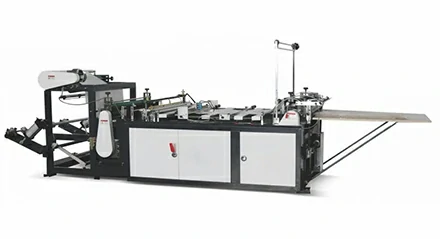
One web, two lanes: how side‑by‑side output doubles production without doubling floor space
A single‑lane bag making machine produces one bag per cycle. A twin‑lane machine produces two bags per cycle. The film is slit in half lengthwise as it passes through the slitting knives. One half becomes the left lane, the other the right lane. Two sets of sealing bars, cutting knives, and stacking systems operate simultaneously, synchronized by the PLC.
For a side seal bag maker running 400 bags per minute per lane, the twin‑lane configuration outputs 800 bags per minute — 48,000 bags per hour. The center cut between lanes also reduces film waste. Instead of trimming both edges of a wide single‑lane web, the cut creates two finished edges and recycles only the narrow outer trim. For a plant processing 1,000 tons of film per year, that edge trim reduction can save 3‑5% of material cost.
The twin‑lane design also allows the machine to produce two different bag sizes simultaneously if the film is pre‑slit accordingly, although the standard configuration is identical lanes. The operator sets the bag length, sealing temperature, and cutting timing on the PLC touch screen. The controller sends the same parameters to both lanes.
Heat sealing, cold cutting: why the bag mouth stays open after the knife passes
A side seal bag that seals at the bottom and sides but has a fused top opening is hard to open on the filling line. The cashier or packer must rub the edges apart, adding seconds to every bag. That delay matters when a packing line runs hundreds of bags per minute.
The side seal bag making machine uses heat sealing cold cutting technology. First, a heated sealing bar applies pressure to the overlapping film layers, melting the polyethylene coating to form the bottom seal and the two side seals. Then, a separate, unheated cutting knife severs the bag along the seal line. The knife is not heated, so it does not melt the cut edge. The bag opening remains crisp, and the end user can open it with one hand.
The two‑step process also protects the cutting blade. A hot blade softens with repeated heating and can warp after extended runs. The cold‑cut knife operates at room temperature, maintaining its edge geometry through thousands of cycles. For a plant running two shifts, the cold‑cut knife may last a year before replacement, while a hot blade would need replacement every 3‑4 months.
The sealing temperature is adjustable through the PLC. For thin 0.01mm HDPE, the operator sets a lower temperature to prevent burn‑through. For thick 0.05mm LDPE, the temperature is increased to ensure a full melt. The temperature is displayed on the touch screen and stored in the job recipe.
Why a decorative heat‑sealing border matters for retail packaging
Some bag styles require a textured, ruffled edge rather than a flat one. The side seal bag making machine can be equipped with a heat‑sealing decorative border attachment. The sealing bar is engraved with a pattern — serrated, wave, or diamond — that transfers to the melted polyethylene as the bar presses down. The result is a bag with a finished, boutique appearance, often used for candy bags, gift pouches, and high‑end bakery packaging. The decorative border also strengthens the seal edge, reducing the risk of the layers separating under load. The attachment is swappable; the operator replaces the standard flat sealing bar with the patterned bar and adjusts the sealing pressure accordingly.
Photoelectric tracking: why the machine stops when the registration mark is missing
Printed side seal bags have registration marks — small dark squares printed on the film edge — that tell the machine where to cut and seal. If the film stretches or the printing cylinder slips, the registration mark shifts. A bag making machine without tracking will cut through the middle of the brand logo.
The side seal bag making machine integrates a photoelectric tracking system with a Panasonic sensor and two‑way correction capability. The sensor reads the registration mark in real time. When the mark arrives earlier or later than expected, the PLC calculates the error and adjusts the bag pull length for the next cycle, shifting the cut position back into register. The two‑way correction adjusts in both directions (longer or shorter pull), so the machine does not overshoot and create a new error.
If the sensor fails to detect a mark at the expected interval — because a film splice passes through, the ink density varies, or the film slips — the machine triggers a malfunction alarm and stops immediately. The operator corrects the film position or replaces the damaged roll and restarts. The scrap material wasted is limited to one or two bags. For a line running 400 bags per minute, avoiding a 30‑second blind run of 200 misprinted bags can save 200 bags of material plus the sorting labor.
The machine also includes an auto‑sample function that automatically ejects one bag every programmed number of cycles into a separate bin, allowing the operator to inspect registration and seal quality without stopping the line. The photo‑eye sensitivity is adjustable for different ink contrasts; for low‑contrast marks (yellow on white, silver on clear), the sensor threshold is increased to prevent missed detections.
Automatic counting and double‑platform stacking: how the operator walks away while the machine keeps running
A side seal bag making machine running at 400 bags per minute per lane outputs 800 bags per minute. At that rate, a stacker holding 500 bags fills in less than 40 seconds. The operator cannot stand at the delivery end all shift.
The machine includes an automatic counting function with a settable counting alarm. The operator programs the desired number of bags per stack on the touch screen (e.g., 500). When the count is reached, the machine sounds an alarm and stops automatically. A separate total counter accumulates the total bags produced across all jobs for shift reporting.
The stacker uses a double‑platform system. A second stacker platform swings into place while the operator removes the finished stack from the primary platform. The machine does not stop for stack clearance. The operator changes empty core rolls and clears the stacker during runtime rather than during planned stops.
For a side seal bag converter running two shifts, the automatic counting and double‑platform stacker save 30‑45 minutes of downtime per shift compared to a machine without these features. The automatic constant temperature controller keeps the sealing bars within ±2°C of the setpoint, eliminating the temperature drift that causes weak seals as the machine warms up.
Automatic tension control and magnetic powder brake: why the film does not stretch or wander
Thin 0.01mm film stretches easily. If the unwind tension is too high, the film elongates, and the bag length drifts. If tension is too low, the web goes slack and the film wanders sideways, causing the side seals to land off‑center.
The side seal bag making machine uses a magnetic powder brake on the unwind stand. The brake applies a controlled resistance to the roll, creating consistent back tension. A dancer roller senses the web tension and signals the PLC to adjust the brake torque. As the roll diameter decreases, the torque is reduced automatically, maintaining constant tension from full roll to core.
The automatic tension control also compensates for film stretch. If the web elongates during a long run, the tension controller reduces the brake torque slightly, allowing the film to relax. For a plant running recycled HDPE with variable mechanical properties, the automatic tension system prevents the bag‑to‑bag length variation that would otherwise require operator intervention.
The feed rollers are covered with polyurethane, which grips the film without slipping and resists abrasion from recycled material. The polyurethane cover is oil‑resistant and does not swell when exposed to lubricants from the machine‘s bearings.
Applications: from garment bags to bread loaves to industrial liners
The side seal bag making machine is listed for bags for socks, towels, bread, garment covers, and industrial packaging. Each application places different demands on the machine.
-
Garment bags and linen packaging: Clear PE or OPP film at 0.02‑0.03mm thickness. The bag must be dust‑tight to keep linens clean in warehouse storage. The side seal configuration provides a better barrier than a bottom seal bag. The machine includes automatic punching for hanger holes and, in some configurations, an optional gluing unit for resealable adhesive strips.
-
Bread bags: Food‑grade LDPE or LLDPE at 0.03‑0.05mm thickness. The side seal bag stands open on a bread line, making it easy to drop the loaf in. The sealing temperature must be controlled precisely; overheating can cause the film to stick to the knife, leaving a rough edge. The side seal configuration is preferred over bottom seal because the bag does not need to be folded open before filling.
-
Towel and sock pouches: Small bags (100‑200mm wide, 200‑300mm long) at the highest speeds. The photoelectric tracking ensures the brand logo is centered. Automatic punching creates a Euro‑slot for rack display. The bag is typically made from clear OPP film so the product is visible.
-
Industrial liners and heavy‑duty sacks: Thicker LDPE (0.05‑0.10mm) for shipping sacks and bin liners. The machine runs at reduced speed (200‑300 bags per lane) because the thicker material requires longer seal dwell time. The cold‑cut knife maintains its edge longer when cutting thick film than a hot blade would.
14mm steel plate and NSK bearings: why the frame does not shake at 400 cycles per minute
A side seal bag making machine running at 400 cuts per minute cycles once every 0.15 seconds. The moving parts stop and start violently. If the frame flexes, the sealing bars will not align precisely, and the bags will have crooked seals or uneven lengths.
The machine uses 14mm steel plate construction for the main rack. This thickness exceeds many competitors in the same price range. The thick steel dampens vibration at high speed, preserving cut squareness and seal alignment. The frame is manufactured from heavy steel plate, welded and stress‑relieved to prevent warping over time.
The NSK bearings on rotating components extend service life between rebuilds. The bearings are rated for 50,000 hours of operation at full load. For a plant running two shifts (16 hours per day), that is over eight years of service before bearing replacement. The rubber rollers in the feed section are made of polyurethane, which outlasts natural rubber in applications where the film contains abrasive fillers from recycled material.
The main rack construction includes the unwind stand, the slitting section, the sealing and cutting station, and the double‑platform stacker. The unwind stand is built with a heavy‑duty frame to support jumbo rolls weighing up to 200kg.
How the side seal bag making machine fits into a bag converter‘s packaging line
Guoran Machinery has manufactured side seal bag making equipment for converters producing garment bags, linen packaging, bread pouches, sock bags, and industrial liners. The side seal bag making machine features twin‑lane configuration, 100‑400mm bag width, 260‑800mm bag length, 0.01‑0.05mm thickness, 400‑800 bags/min output, heat sealing cold cutting technology, photoelectric tracking with auto‑stop, automatic double‑sided adhesive tape application, automatic hole punching, heat‑sealing decorative border option, double‑platform automatic stacking, settable counting alarm, PLC touch screen with job recipe storage, and compatibility with HDPE, LDPE, LLDPE, and biodegradable films.
A side seal bag making machine that seals three edges in one pass, tracks printed registration marks without operator intervention, and stacks finished bundles while the operator walks away keeps a packaging line running through the shift. For a bag converter who needs garment bags in the morning and bread pouches after lunch, the twin‑lane side seal machine with heat sealing cold cutting technology delivers the width range, speed flexibility, and registration accuracy that multi‑product lines require.
【Request a quote from Guoran Machinery】
Send Guoran your target bag size (width 100‑400mm, length 260‑800mm), film thickness, and daily bag volume to receive a side seal bag making machine specification and recipe setup recommendation.