
 English
 عربي
عربي A mid-sized coffee roaster spent six weeks comparing bag making machines. They had a clear requirement: produce 80,000 pillow bags per month for their 250g ground coffee line. The machine they finally purchased looked perfect on paper—correct speed, correct bag width, reputable brand.
But when the machine arrived, they discovered a problem no spec sheet had revealed. Their chosen machine used a lap seal configuration for the back seal. Their film, a high-barrier metallized laminate, performed poorly with lap seals. The inner layer sealed against the outer layer's printed surface, creating micro-channels that slowly leaked aroma. Within three weeks of storage, their coffee lost its characteristic bloom.
The machine worked flawlessly. The film worked perfectly. But the combination failed because one detail—seal type versus film construction—had been overlooked.
This is the true risk of buying a bag making machine. Not that the machine is "bad," but that the match between your product, your film, and your machine's specific configuration is wrong.
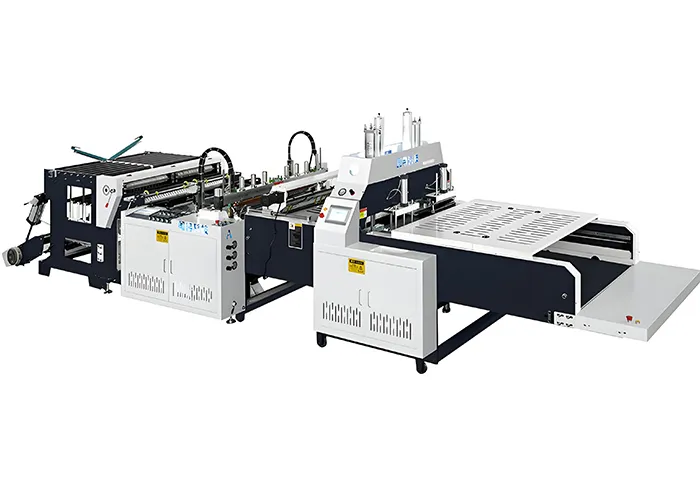
Breaking Down the Bag Machine by Output Style
A bag making machine takes flat film, folds it, seals it, and cuts it into finished bags. But the output varies dramatically based on three components: the forming triangle (or collar), the sealing jaw pattern, and the cutting/punching unit.
Here are the three most common bag types for food packaging, and what each requires from the machine.
1. Pillow Bag (The Workhorse for Flow-Wrap)
Pillow bags are what you see around bread, frozen vegetables, or rice cakes. The seal runs along the back (fin seal or lap seal) and across both ends.
-
Machine requirement: A forming collar that creates a continuous tube, plus end-seal jaws that simultaneously seal and cut.
-
Best for: High-speed, low-cost packaging where shelf display is not critical.
-
Film limitation: Works best with heat-sealable film (PE, PP, laminated structures). Very thick or stiff films may crack at the back seal.
-
Key decision point: Lap seal vs. fin seal. Lap seal joins the inner film layer to the outer layer (better appearance, riskier for some films). Fin seal joins inner layer to inner layer (stronger, but leaves a visible tail).
2. Three-Side Seal Bag (The Transparent Counter Bag)
Three-side seal bags are sealed on the left, right, and bottom. The top remains open for filling. You see these for coffee beans, dried herbs, or small hardware.
-
Machine requirement: A machine with independent sealing bars for each side, plus a precise film indexing system to ensure the print registers correctly.
-
Best for: Small to medium bags where you want full-front display area.
-
Common mistake: Using a three-side seal machine for liquid or very fine powder. The bottom corners are weak points for leakage.
3. Stand-Up Pouch (The Retail-Ready Bag)
Stand-up pouches have a gusseted bottom that expands when filled. They dominate premium snacks, pet treats, and liquid seasonings.
-
Machine requirement: A bag machine with a bottom gusset forming unit, plus side sealing and bottom punching capability. Not every machine has this.
-
Best for: Retail shelves, premium branding, re-closable applications (with zipper attachment).
-
Reality check: Retrofitting a standard pillow machine to produce stand-up pouches typically costs 60-80% of a new machine. Better to buy the correct configuration upfront.
Key Machine Attributes That Determine Compatibility
Rather than searching for a generic "Food Packaging Bag Equipment" catalog, examine these four technical attributes. They separate a capable machine from an expensive mistake.
| Attribute | What It Controls | Poor Match Example | Ideal Match |
|---|---|---|---|
| Sealing jaw width | Max bag length | Using a 250mm jaw for a 300mm pillow bag → incomplete end seals | Jaw width ≥ bag length + 20mm margin |
| Film unwind tension | Bag consistency | High-tension on thin, stretchy film → bag length variation ±5mm | Servo-controlled tension with dancer arm |
| Sealing temperature range | Film compatibility | Only up to 180°C but need 220°C for high-barrier film → weak seals | PID-controlled, up to 250°C with separate zone control |
| Punch/die unit | Hanging holes, euro slots, rounded corners | No punch unit but need a euro slot for retail → manual punching one by one | Integrated servo punch with adjustable position |
Temperature and tension ranges referenced from typical OEM specifications and ASTM F2029 (heat seal strength testing standard).
Deep-dive on sealing jaws: The jaw pattern also matters. A flat jaw creates a solid seal. A serrated jaw creates a tear-off line (useful for portion packs). A pattern jaw (dots or lines) looks better on retail packaging. If you are unsure which pattern your product needs, see actual jaw pattern examples and their applications before you specify.
The Overlooked Part: Film Behavior on the Machine
Two identical bag machines can produce very different results with the same film. Why? Because a bag making machine is a thermal-mechanical system. Small variations in film properties change everything.
-
Coefficient of friction (COF): Per ASTM D1894, film COF typically ranges 0.2–0.5. If your film slips too much (low COF), the pull belts cannot advance it consistently. If it grips too hard (high COF), the film sticks to the forming collar and wrinkles.
-
Seal initiation temperature (SIT): Different films seal at different temperatures. LDPE seals around 120–150°C. High-barrier PET/PE laminates sometimes need 200°C+. A machine with a narrow temperature range will fail on multi-layer films.
-
Film thickness uniformity: A variation of ±5% across the roll width causes bag length inconsistency. The machine's registration sensor compensates only so much.
-
Seal configuration compatibility (critical): The coffee roaster's problem mentioned earlier came from this factor. Lap seals require that the outer film layer has adequate sealability. Many high-barrier films use a sealant layer only on the inner side. For those films, a fin seal (inner-to-inner) is mandatory. Know your film's construction before choosing back seal type.
Common Operational Mistakes (And How to Avoid Them)
Based on field reports from food packaging lines, here are three frequent errors when running a bag machine.
Mistake 1: Ignoring jaw dwell time
Dwell time is how long the hot jaw presses the film. Too short → weak seal. Too long → film melts through. Many operators only adjust temperature, not dwell. The correct sequence: set temperature first, then adjust dwell in 0.05-second increments until the seal peels with fiber tear.
Mistake 2: Misaligning the film guide rollers
A roller off by 2 degrees shifts the film sideways by 10mm over 10 meters. The bag's printed image drifts. Fix it with a laser alignment tool or a simple straight-edge reference, done during machine setup once per week.
Mistake 3: Running the same jaw pressure for all bag widths
Wider bags need lower jaw pressure because the force distributes across more surface area. Use a pressure gauge and adjust down as bag width increases.
Proactive maintenance advice: If you run more than one shift, keep a second set of sealing jaws pre-heated and ready. Jaw changeovers take 10 minutes instead of 60 minutes waiting for cold jaws to reach temperature.
How to Select Without Regret: A 5-Step Decision Path
Step 1 – Define your bag output first
Draw your finished bag. Measure length, width, bottom gusset (if any), and sealing pattern. Then ask: can a standard pillow machine produce this? If no, move to three-side seal or stand-up pouch category.
Step 2 – Get your film's complete technical data sheet
Do not accept just the thickness. Request: seal initiation temperature (SIT), COF value (slip property), and most importantly—seal layer construction. Ask: "Is your seal layer on one side or both sides?" This determines lap seal vs. fin seal compatibility.
Step 3 – Match machine temperature range to your film
Ensure your candidate machine's max temperature is at least 40°C above the film's SIT. This margin handles production speed changes and ambient temperature variations.
Step 4 – Test with your actual film roll on a live machine
Never accept a demo using the machine owner's film. Send a complete roll of your own film. Run it at your target speed (for example, 60 bags/minute). Check bag length consistency (measure 20 consecutive bags) and seal peel strength. Request a seal cross-section photo to verify no micro-channels exist.
Step 5 – Verify spare parts availability
Ask: are sealing jaws, heating elements, pull belts, and forming collars standard off-the-shelf parts? Custom parts mean weeks of downtime waiting for replacements. Also ask the lead time for a replacement forming collar—it should be under 10 business days.
A Note on Supplier Communication
When you speak to bag machine suppliers, avoid asking "Which machine do you recommend?" This invites a generic answer. Instead, come prepared with three specific pieces of information:
-
Your finished bag drawing (dimensions, seal pattern, gusset if any)
-
Your film roll spec (material structure, thickness, width, core size)
-
Your film's technical data sheet (especially SIT and seal layer location)
With these three items, a competent supplier can immediately tell you which forming collar size, jaw width, and seal configuration your application requires. Any supplier who does not ask for these three items should raise a yellow flag.
Final Thought: The Machine Exists to Serve Your Bag, Not the Reverse
Your brand identity is printed on that bag—the size, the seal pattern, the bottom gusset, the hanging hole. The bag making machine is simply the tool that turns flat film into that identity. Choose the tool for the bag you already need, with full awareness of how your film's construction dictates seal type.
And when you are ready to move from film specs to a machine configuration that actually matches, you can review bag machine specifications organized by output bag type and seal configuration.
Still unsure whether your film's seal layer works better with lap seal or fin seal? A three-minute conversation with a bag machine engineer—armed with your film's data sheet—saves three weeks of troubleshooting later.